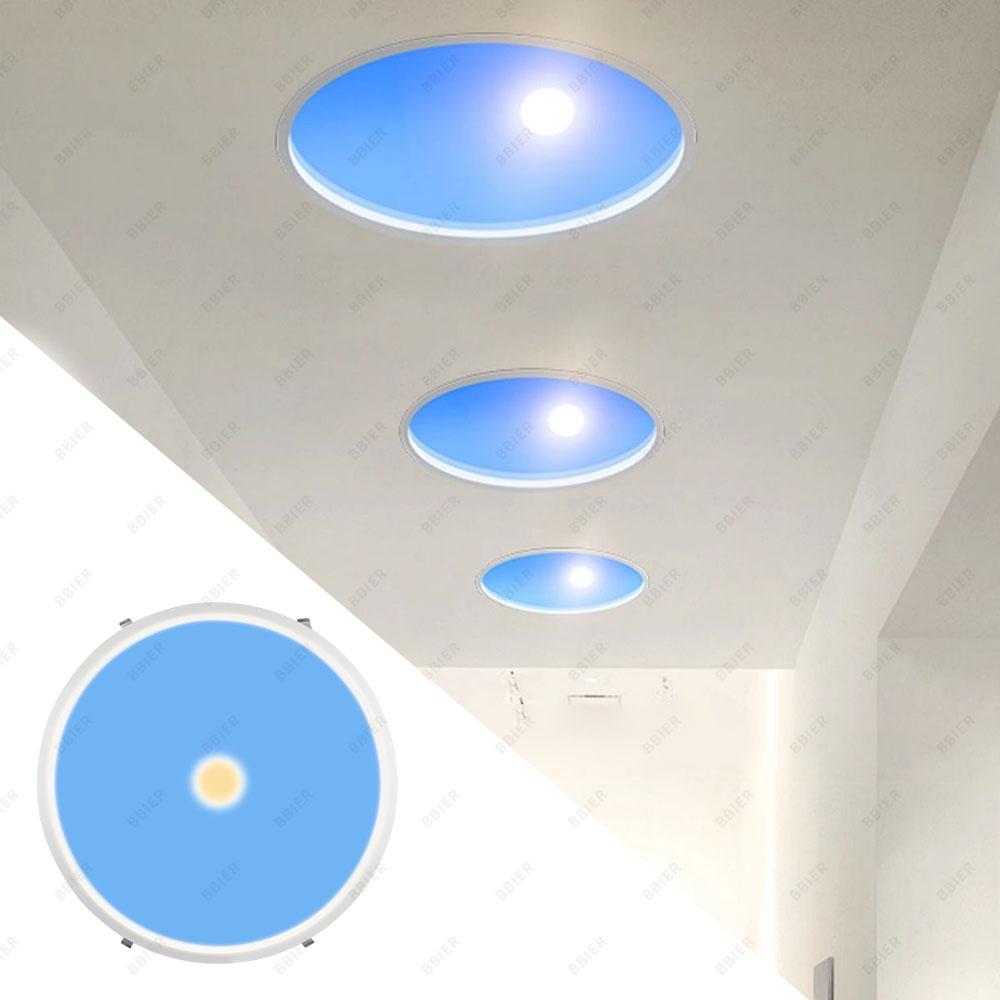
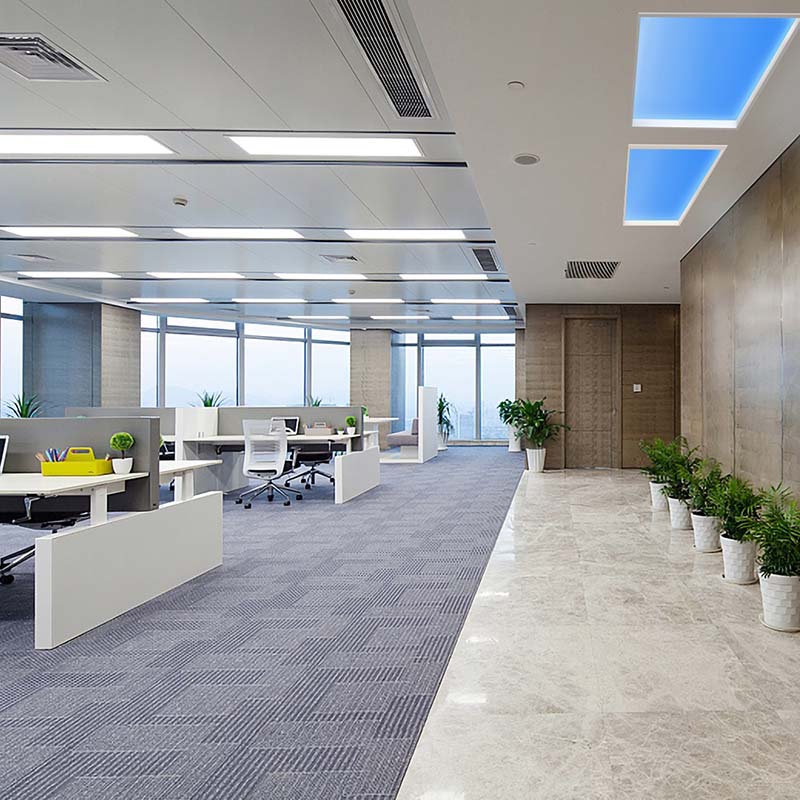
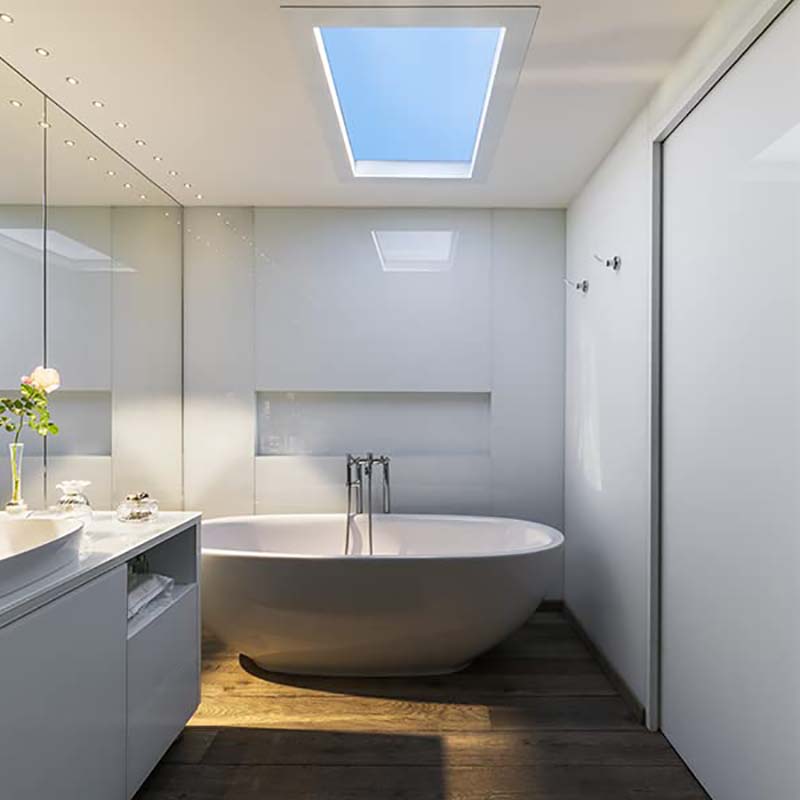
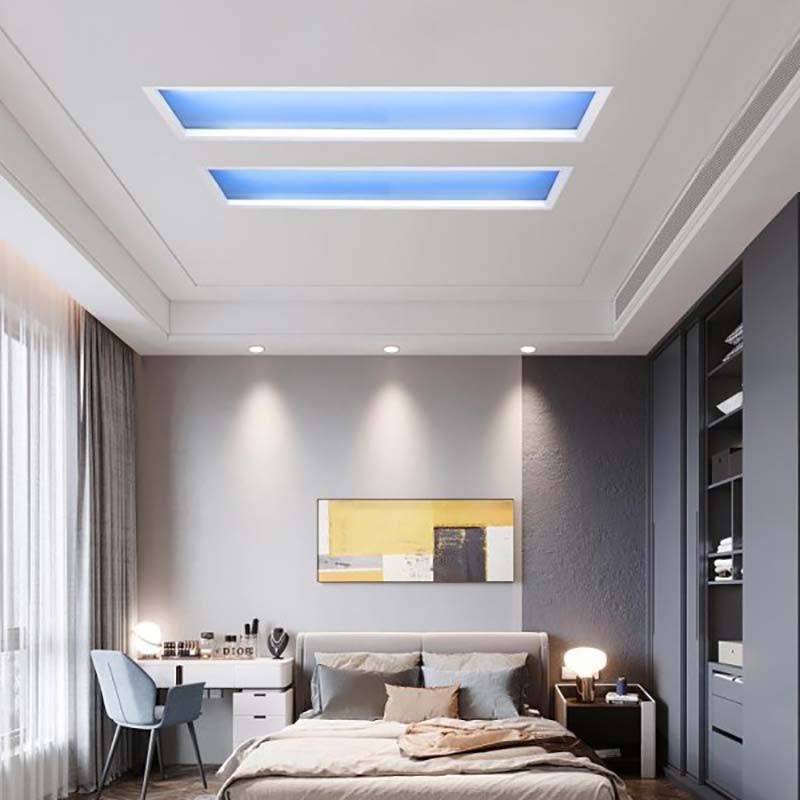
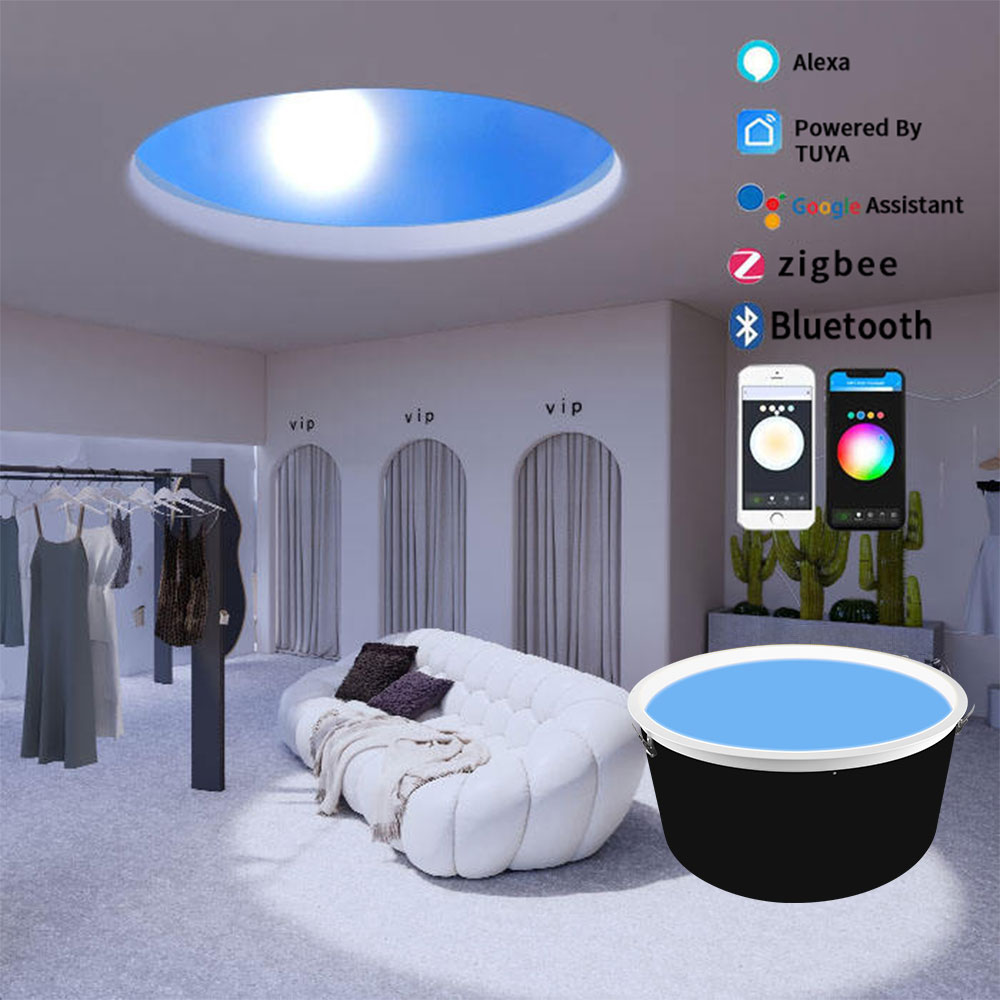
Imagine waking to the gentle glow of morning sunlight filtering through your ceiling, even on overcast days. Picture a home office where colors pop with the vibrancy of a summer afternoon, or a basement transformed into a bright playroom without a single window. This isn’t a futuristic fantasy—it’s the reality of Skylight LED, the lighting revolution that’s reimagining how we bring “sunlight” into our spaces, free from the flaws of traditional skylights.
The End of Traditional Skylight Frustrations
For decades, homeowners and architects turned to traditional skylights for natural illumination, but their drawbacks have long overshadowed their benefits. These roof-mounted windows act as heat magnets, adding 25-35% to a home’s internal temperature and driving up cooling costs . They leak during storms, shatter in hailstorms, and flood interiors with UV radiation that fades furniture, artwork, and fabrics over time . Worse, they’re confined to sloped roofs on top floors—leaving basements, stairwells, and interior rooms trapped in darkness.
Skylight LED eliminates every one of these pain points. As a “tubeless skylight alternative,” it delivers the brightness and ambiance of natural sunlight without penetrating the roof, relying instead on solar-powered LED technology that adapts to any space . No more heat gain, no more leaks, no more structural limitations—just consistent, customizable light that transforms even the darkest corners.
The Science of “Perfect Light”: What Makes Skylight LED Exceptional
At the heart of Skylight LED’s appeal is its ability to mimic sunlight so accurately that our eyes (and minds) barely notice the difference. Here’s how the technology works:
1. Full-Spectrum Illumination That Rivals the Sun
Leading Skylight LED systems use Sunturalux technology—the same engineering used in aviation lighting—to produce a full-spectrum glow that covers ultraviolet to infrared wavelengths . This means a 显色指数 (Color Rendering Index, CRI) of up to Ra98, far exceeding standard LEDs. For artists and designers, this translates to colors that look identical to how they appear in natural light; for students, it means textbooks and notes are easier to read without eye strain.
2. Solar-Powered Efficiency (No More Sky-High Bills)
Most Skylight LED systems pair a compact roof-mounted solar panel with an LED ceiling panel, connected by a thin cable that requires only a 10mm roof hole—eliminating water ingress risks . The solar panel collects sunlight during the day, storing energy to power the LED panel, which adjusts its brightness automatically to match outdoor conditions. On cloudy days, it dims like overcast sunlight; on bright afternoons, it glows with the intensity of midday. The result? Zero electricity costs for daytime lighting—saving households hundreds annually while reducing carbon footprints .
3. Smart, Eye-Friendly Design
Unlike harsh overhead lights or flickering traditional bulbs, Skylight LED prioritizes eye health. Top models meet IEC RG0 blue light safety standards (the highest level of blue light protection) and achieve 0.00% 频闪深度 —meaning no visible or invisible flicker that causes eye fatigue . They also offer uniform illumination: a single 55cm-wide LED panel can cover a 1.2m desk (or dining table, or piano) with an 照度 uniformity of 0.86, far surpassing AA-class lighting standards and eliminating dark spots . For families with children, this is a game-changer—studies show consistent, natural-like light improves focus and reduces myopia risk in kids who study for hours daily.
From Homes to Hotels: Skylight LED in Action
Skylight LED’s versatility makes it a favorite across residential and commercial spaces. Here are real-world examples of how it’s transforming environments:
Residential: A Basement Turned Family Hub
In multi-story homes, basements are often wasted as storage spaces due to lack of natural light.
Skylight LED changes that. Sydney homeowner Emma Carter installed two solar-powered LED panels in her basement, turning it into a playroom for her two children. “Before, the basement was dark and damp—we barely went down there,” she says. “Now it’s brighter than our living room. The kids color and play for hours, and I don’t worry about UV fading their toys or leaks during rain.”
For families with top-floor rooms, Skylight LED still outperforms traditional skylights. The 霍尼韦尔 Skylight Pro—a premium residential model—uses a dual-light design: the upper panel reflects light off the ceiling to boost ambient brightness, while the lower panel uses a micro-prismatic plate to reduce glare (UGR <13), making it ideal for home offices and study nooks . Its mechanical knob control lets kids adjust brightness independently, no apps or complicated settings required.
Commercial: The “Greenhouse” Event Space’s Lighting Transformation
In San Francisco’s Financial District, the historic “Conservatory” event venue underwent a 2023 renovation that relied on RGBW Skylight LED to honor its architecture . By day, the LED panels integrated seamlessly with natural sunlight, illuminating the venue’s 38-foot Doric columns and trusses without creating harsh shadows. By night, the system shifted to warm, atmospheric light that turned the space into a sought-after venue for corporate galas and weddings. “We needed lighting that felt ‘natural’ even when the sun went down,” says the venue’s manager. “Skylight LED delivered—guests still ask where the ‘skylights’ are.”
Restaurants and retail stores are also embracing the technology. A café in Melbourne replaced traditional track lighting with Skylight LED panels, noting that customers stayed longer and spent more in the “sunlit” environment. Retailers report that clothing and products look more appealing under full-spectrum light, boosting sales.
Beyond its immediate benefits, Skylight LED aligns with two of the biggest trends in design and sustainability:
1. Sustainable Design Without Compromise
LED technology is already the gold standard for green lighting—it uses 80-90% less energy than incandescent bulbs and lasts up to 100,000 hours (27 years with daily use) . When paired with solar power, Skylight LED becomes a net-zero lighting solution. For eco-conscious homeowners and businesses, this isn’t just a selling point—it’s a responsibility.
2. Flexible Architecture for Modern Lifestyles
As more people work from home and repurpose spaces (think: a spare room turned into a home gym, or a garage into a studio), lighting needs to be adaptable. Skylight LED’s compact size and easy installation mean it can be added to any room, regardless of roof type or location . Renters can even use plug-in models to brighten apartments without permanent modifications.
Final Thoughts: Bring the Sun Indoors—On Your Terms
Traditional skylights promise natural light but deliver headaches: heat, leaks, UV damage, and limitations. Skylight LED flips the script, offering the warmth and clarity of sunlight with the efficiency, safety, and flexibility of modern technology. It’s not just a light fixture—it’s a way to make every space feel more open, more vibrant, and more connected to the outdoors.
Whether you’re renovating a home, designing an office, or upgrading a commercial space, Skylight LED isn’t just an alternative to traditional lighting—it’s a better one. The sun may set at dusk, but with Skylight LED, daylight can last all day (and all night, if you want it to).
Ready to redefine daylight in your space? Discover how Skylight LED can transform dark rooms into bright, energy-efficient havens—no roof holes required.