



Understanding Ingress Protection (IP) Ratings: A Comprehensive Guide for Outdoor and Industrial Lighting
When selecting lighting solutions for outdoor and industrial environments, understanding Ingress Protection (IP) ratings is crucial. These ratings, which measure the level of protection against dust, water, and physical impacts, ensure that your lighting equipment performs reliably under harsh conditions. This guide provides a detailed breakdown of IP ratings, focusing on their application to outdoor and industrial lighting.
What Is Ingress Protection (IP)?
Ingress Protection (IP) is an internationally recognized standard that classifies the degree of protection offered by electrical enclosures, such as light fixtures, against the ingress of dust, water, and other environmental factors. Defined by the International Electrotechnical Commission (IEC) under standards IEC 529-598 and GB 700-86, IP ratings are expressed as two-digit numbers:
- The first digitrepresents protection against solid objects (such as dust).
- The second digitrepresents protection against water.
The higher the number, the greater the level of protection, making it essential to understand these ratings to ensure the durability and performance of your lighting systems.
Decoding the IP Rating System: First Digit (Dust Protection)
The first digit of an IP rating indicates the level of protection against solid objects, including dust. This scale ranges from 0 (no protection) to 6 (completely dust-tight). Here’s a breakdown:
- IP0X: No protection. no special protection for people or objects outside.
- IP1X: Prevent solids with a diameter > 50mm. prevent the human body (such as the palm) from accidentally touching the internal parts of the appliance, and prevent large-sized (diameter greater than 50mm) foreign objects from entering.
- IP2X: Prevent solid foreign objects with a diameter greater than 12.5 mm from entering. Prevent human fingers from touching the internal parts of the appliance, and prevent medium-sized foreign objects (larger than 12.5 mm in diameter) from entering.
- IP3X:Prevent solid foreign objects with a diameter greater than 2.5 mm from entering. Prevent tools, wires and similar small foreign objects with a diameter or thickness greater than 2.5 mm from entering and contacting the internal parts of the appliance.
- IP4X:Prevent solid foreign objects with a diameter greater than 1.0 mm from entering. Prevent tools, wires and similar small foreign objects with a diameter or thickness greater than 1.0 mm from entering and contacting the internal components of the appliance.
- IP5X: Prevent foreign objects and dust. It is impossible to completely prevent dust from entering, but the amount of dust entering will not affect the normal operation of the electrical equipment.
- IP6X:Prevent foreign objects and dust. Completely prevent the intrusion of foreign objects and dust.
For lighting applications, IP6X is generally the standard required for outdoor environments where dust, dirt, and other particulates could affect the performance of the lighting.
Decoding the IP Rating System: Second Digit (Water Protection)
The second digit of an IP rating specifies the level of protection against water ingress, ranging from 0 (no protection) to 8 (protection against long-term immersion). Here’s a breakdown:
- IPX0:No protection. No special protection against water or moisture.
- IPX1:Prevent water drops from entering. Vertically falling water drops (such as condensation) will not damage the appliance.
- IPX2: When tilted 15 degrees, it can still prevent water drops from entering. When the appliance is tilted from vertical to 15 degrees, dripping water will not cause damage to the appliance.
- IPX3:Prevent splashing water from entering. Prevent rain or water sprayed at an angle less than 60 degrees from vertical from entering the appliance and causing damage. Protected against splashing water from any direction.
- IPX4:Prevent splashing water from entering the appliance. Prevent splashing water from all directions from entering the appliance and causing damage.
- IPX5:Protected against immersion by water jets. Protected against low-pressure water jets for at least 3 minutes.
- IPX6:Protected from heavy water jets lasting at least 3 minutes.
- IPX7:Prevent water from entering during immersion. Electrical equipment can still operate normally when immersed in water for a certain period of time or under certain water pressure conditions.
- IPX8:Prevent water from entering when sinking. Electrical equipment can be submerged in water indefinitely under a certain water pressure and still ensure normal operation of the equipment.
When choosing outdoor lighting solutions, IP65 or IP67 are often the preferred ratings, depending on the environmental conditions.
Choosing the Right IP Rating for Outdoor and Industrial Lighting
1. Indoor Lighting: IP20 and IP44
For standard indoor lighting applications, IP20 is often sufficient, offering basic protection against dust but no protection against water. However, for environments like kitchens and bathrooms where moisture is a concern, IP44 is typically recommended. This rating offers protection against splashes of water and small solid objects.
2. Outdoor Lighting: IP54 and IP65
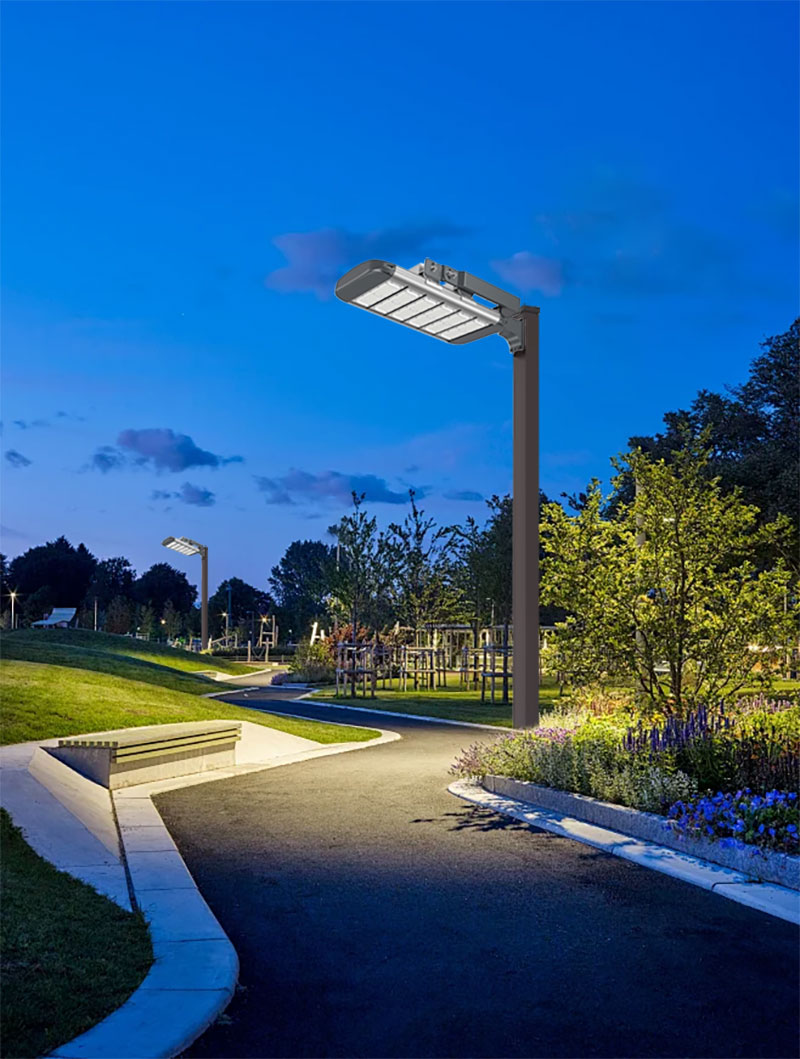
Outdoor lighting fixtures, such as those used in balconies, patios, and simple garages, require higher protection due to exposure to various weather conditions. For these environments, IP54 provides protection against dust and water splashes, while IP65 offers higher protection against dust and water jets, making it ideal for street lighting, security lighting, and other outdoor applications.
3. Heavy-Duty Outdoor Lighting: IP67 and IP68
For more demanding applications, such as in industrial settings, IP67 and IP68 are often required. These ratings ensure that the lighting is protected against dust and can withstand temporary or prolonged immersion in water. For example:
- IP67: Ideal for lighting in harsh outdoor environments where the lighting could be exposed to heavy rain or submerged for short periods (e.g., floodlighting for public spaces or industrial lighting near water sources).
- IP68: This is suitable for extremely challenging conditions, such as lighting underwater or in areas where flooding is common. This rating allows for continuous immersion, making it perfect for underwater lights or lighting used in high-risk flood zones.
Application Scenarios and Considerations
1.High-Powered Outdoor Lighting (e.g., Street Lighting, Parking Lots, and Sports Arenas)
For high-powered outdoor lighting applications like street lights, sports arenas, and parking lots, IP65 or IP67 ratings are often the most suitable. These environments expose lighting fixtures to harsh weather conditions, including wind, rain, dust, and even snow. Therefore, it is essential to choose a lighting fixture with a high level of dust and water protection to ensure long-lasting performance.
- IP65: Ideal for areas with frequent exposure to rain but not submerging conditions.
- IP67: Better for locations with frequent flooding or heavy downpours. This rating guarantees that the lighting fixture will continue to operate even after being submerged in water for up to 30 minutes.
2.Underwater Lighting
For underwater lighting applications, such as pool lighting or fountains, IP68 is the only suitable option. This rating ensures that the lighting fixture can withstand continuous immersion in water and provide reliable illumination even when fully submerged.

Why the Right IP Rating Matters for Your Lighting Solutions
Selecting the right IP rating is crucial for ensuring the longevity and reliability of your lighting systems. Without proper protection, lighting fixtures can be susceptible to damage from environmental factors such as dust, water, and physical impacts. Over time, this damage can lead to:
- Decreased Efficiency: Dust accumulation inside lighting fixtures can block heat dissipation, reducing the efficiency of the light source.
- Shortened Lifespan: Water ingress can cause electrical components to corrode or short-circuit, shortening the life of the lighting system.
- Increased Maintenance Costs: Choosing a fixture with a lower IP rating than required can result in more frequent repairs and replacements, leading to higher maintenance costs.
Key Takeaways for Choosing the Right IP Rating for Your Lighting System
- IP20: Sufficient for indoor environments where moisture is not a concern.
- IP44: Ideal for areas like bathrooms or kitchens with moderate moisture exposure.
- IP65: Recommended for general outdoor lighting applications such as streetlights, parking lots, and gardens.
- IP67: Suitable for locations prone to heavy rainfall or occasional submersion in water.
- IP68: Best for underwater lighting or environments exposed to prolonged immersion in water.
Selecting the correct IP rating ensures that your lighting fixtures will operate efficiently and safely in the harshest conditions. It also minimizes the risk of damage and reduces the need for maintenance.If you’re looking for outdoor lighting solutions that offer high levels of protection and durability, consider the UFO LED High Bay Lights and LED Street Lights from Bbier.com. These products come with high IP65 and IP67 ratings, ensuring optimal performance in both dusty and wet environments. Whether you’re illuminating large outdoor spaces or industrial sites, these lights are designed to withstand the elements while delivering bright, efficient illumination.
We have over 15 years of commercial lighting R&D experience, 50+ LED lights patents, 200+ LED Lights Certifications, Support OEM & ODM, 3/5 Years Warranty. Which can be widely used in commercial, industrial, residential, and other different occasions.Our factory has an experienced and skilled R&D team, dedicated to constantly innovate, improve product performance and quality. We also have a complete production line, from design, manufacturing to testing, every link goes through strict quality control, to ensure that each product can meet the needs and expectations of customers. We also provide comprehensive after-sales service, providing technical support and maintenance services to make customers' experience more smooth and satisfactory.BBIER® adheres to the principle of "quality first, customer first", and is committed to providing customers with high-quality products and services, becoming a trusted partner of customers. We will continue to innovate and improve, bring more value and contribution to customers.
50+ LED Lights Patents
200+ LED Lights Certifications
Support OEM & ODM
DLC
ETL
ISO
TUV
UL
Tel:
Email: info@bbier.com
Headquarter: No.4/F Bldg 5, 37 Kengwei Ave., Shiyan Town, Bao'an Dist., Shenzhen 518108, China
USA California Warehouse: 42410 Winchester Rd., Temecula, CA 92590

